

.jpg)
Airbnb’s 2025 Winter Release is creating new opportunities for hosts and property managers to make 2026 their best year yet. In our latest STR Rev Talk, we unpacked how the Winter Release features interact with Airbnb’s ranking model, what changes in guest behavior they are likely to trigger, and which practical steps property managers can take now to improve visibility and revenue in 2026.
We hosted the session together with John deRoulet (Wheelhouse) and Frank Bosi (Hostfully). Together, they connected Airbnb’s newest features to the fundamentals of how listings are surfaced in search and how operators can adjust pricing, content, and policies to convert more of the traffic they already have.
Watch the full webinar here.
How Airbnb ranking works in practice
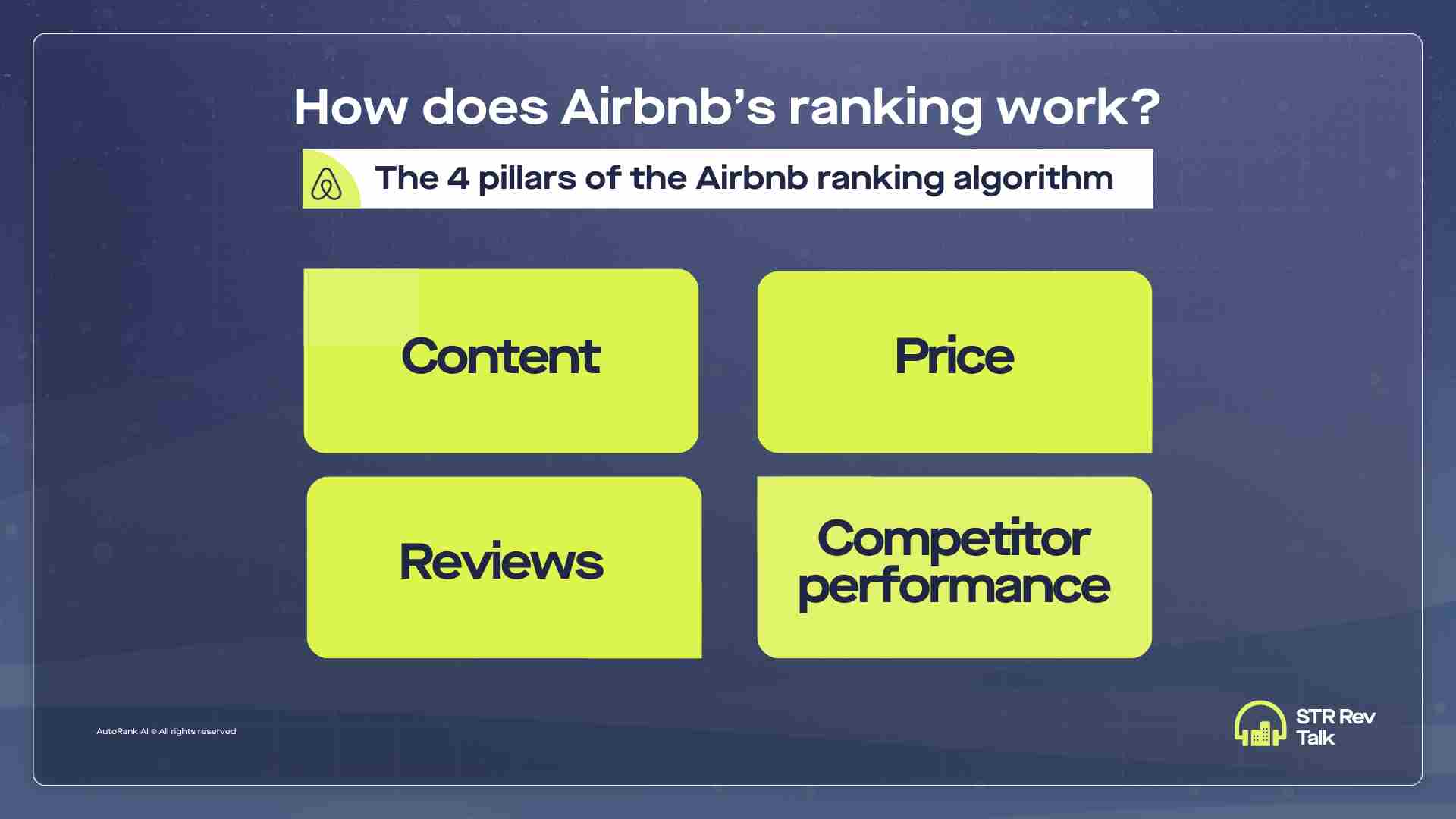
Airbnb visibility is shaped by four interrelated pillars.
- Price influences whether guests click and whether they convert once they reach the booking page.
- Reviews shape trust and act as a strong long-term signal of quality and consistency.
- Content determines whether the algorithm can understand what the listing offers and whether guests feel the value is compelling within seconds.
- Competitor performance is often overlooked but critical: Airbnb does not evaluate a listing in isolation. It benchmarks performance against nearby alternatives, meaning your visibility is affected by how your competitors price, position, and present their inventory.
The key takeaway is that ranking is not a single score. It is the output of many signals across the guest journey. Airbnb learns from guest behavior beyond bookings: impressions, clicks, time spent viewing a listing, scrolling through photos, moving to the booking screen, and abandoning at the last step. Even “rejections” send information back into the system.
If a guest clicks, explores, and then leaves at the price step, that can signal a mismatch between value and price for that audience and date combination. Bookings are the strongest signal, but everything leading up to a booking influences how frequently a listing is shown and to whom.
This matters because the Winter Release expands the ways guests discover listings. If more discovery happens outside strict filters, listings that are clear, relevant, and competitively positioned can gain incremental visibility they would not have received previously.
Book now, pay later, and why friction matters
One of the headline features in Airbnb’s Winter Release is “Book Now, Pay Later,” including the ability to reserve with reduced upfront payment for eligible listings. The current rollout appears more constrained than many operators feared, because eligibility is tied closely to already-flexible cancellation setups. That means it may not be a dramatic shift for every professional manager immediately, but it still changes the psychology of booking.
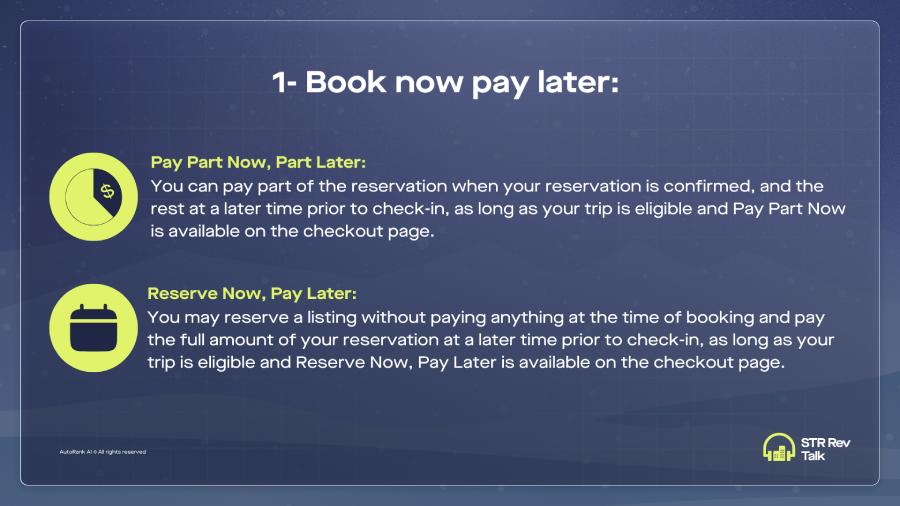
The behavioral implication of this new feature is reducing upfront cost widens the top of the funnel. Guests who previously hesitated may now reserve earlier, which can extend booking windows, while also enabling more impulsive last-minute decisions. The tradeoff is that lower friction can also increase churn. When it becomes easier to reserve, it can also become easier for guests to change their mind later, especially when combined with flexible cancellation policies.
For property managers the strategic lesson is not to panic, but to treat this as a signal that pricing has to be “right more often.” When guests can hold inventory with less commitment, you get fewer guaranteed outcomes from any single booking. Pricing discipline and ongoing pacing awareness become more important, because a booking is no longer the end of the story. It is part of a longer decision cycle.
Dynamic cancellation policies are a revenue lever
The most impactful feature update is Airbnb’s flexible cancellation policy functionality, which allows hosts to apply different cancellation rules for specific dates. It gives you a lever revenue managers have wanted for a long time: the ability to pair flexibility with low-demand periods while protecting revenue on peak dates.
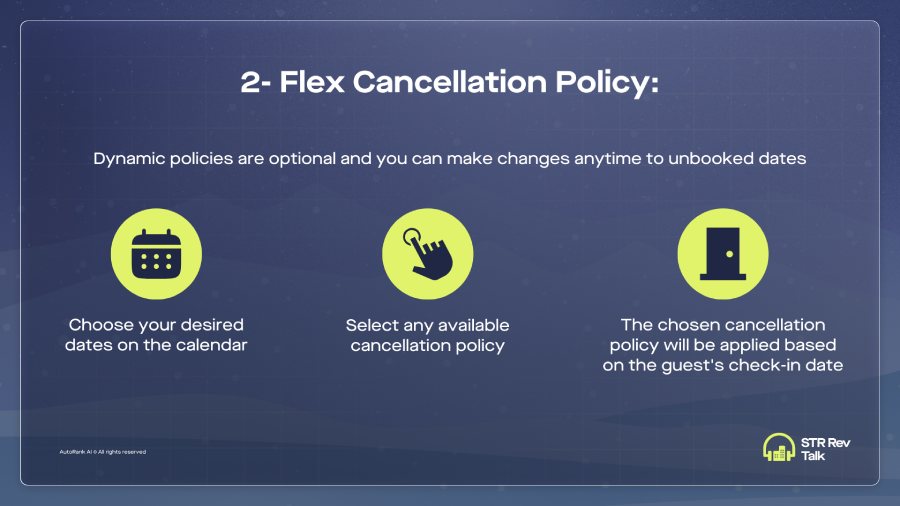
When demand is weak, flexibility can increase conversion by lowering perceived risk for guests. When demand is strong, strict policies protect against speculative bookings and reduce revenue volatility. The ability to set these policies by date means property managers can stop treating cancellation rules as a one-size-fits-all decision and start using them to support an occupancy strategy in shoulder seasons without sacrificing stability during high-demand periods.
Whenever policy complexity increases, teams need visibility. If different reservations carry different cancellation terms, customer support and operations need a clear way to identify what applies to which booking. Otherwise, the guest experience suffers and reviews can follow.
Flexible carousels and maps change how you get discovered
The Winter Release also introduces changes that directly affect how listings are surfaced in search. Flexible carousels expand results beyond strict filters, showing homes from nearby areas, adjacent amenity sets, and similar price bands. Improved map experiences add context-driven browsing, allowing guests to explore listings based on proximity to landmarks, neighborhoods, and points of interest.
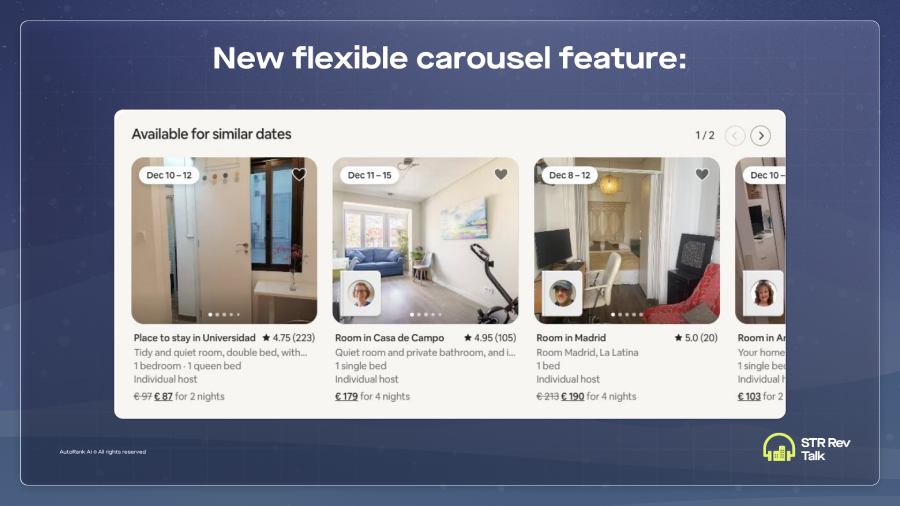
These features reward listings that clearly communicate who the home is for and why it fits a specific trip intent. While you cannot change a property’s location, you can influence whether Airbnb correctly understands your listing’s relevance for different guest types. As Airbnb increasingly matches guests to “similar” or “relevant” options, content becomes a ranking lever rather than a branding exercise.
This is where most operators struggle. Creating structured, complete, and machine-readable content at scale is difficult to do consistently, especially as guest search behavior changes. Titles that communicate value instantly, descriptions that reflect real guest intent, fully populated amenity fields, and accurate contextual signals all influence whether a listing is shown, clicked, and ultimately booked.
How to show up in flexible carousels and increase your listings’ visibility
AutoRank is designed specifically to solve this problem on Airbnb. By continuously optimizing listing content based on how guests search and how Airbnb interprets relevance, AutoRank helps ensure listings send the right signals to the algorithm. This makes properties more eligible for flexible carousels and context-driven discovery, increasing exposure to high-intent guests without relying on manual, static updates.
Flexible discovery features create more opportunities to be shown. Listings that consistently align their content with guest intent and platform signals are the ones that convert that exposure into sustained visibility and bookings.
What to focus on for 2026: Visibility is the new revenue strategy
Airbnb’s Winter Release makes one thing clear: visibility is no longer accidental. Listings that are clearly positioned, consistently optimized, and aligned with how guests search are the ones that benefit most from expanded discovery and reduced booking friction.
AutoRank helps Airbnb listings send the right signals at scale. By continuously optimizing content based on real guest search behavior and platform relevance, we help properties capture more impressions, convert more clicks, and turn visibility into bookings.
If you want to learn how AutoRank helps listings perform better on Airbnb, explore how we work and what that could mean for your portfolio.